Blog
Ibogaine Treatment: Safety, Process, Eligibility, and What to Expect
If you’re researching ibogaine treatment seriously, you’re already asking better questions than most. Not “will this work?” but “is this safe? Is this right for me? And who should I trust with something this significant?” That kind of due diligence isn’t hesitation — it’s exactly the right instinct.
Ibogaine is not a wellness retreat. It is a powerful neurological intervention that can interrupt years of addiction, trauma, and compulsive behaviour in a way that few treatments can. It can also carry real physical and psychological risk if administered without proper medical infrastructure. The difference between a life-changing experience and a risky one comes down almost entirely to the clinical environment around it.
At Bassé, every client receives personal care from board-certified emergency physicians with 24/7 onsite coverage.
Our Scientific Advisor, Dr. Deborah Mash, is the only researcher in the world granted FDA approval to conduct human ibogaine trials. Our founder, Laura Shapiro, found ibogaine after 14 years of opioid addiction — and built Bassé around the standard of care she wished had existed for her.
This guide answers the three questions every serious candidate brings to their research: Is it safe? Does it work? And is it right for me?
What Is Ibogaine Treatment?
Ibogaine is a psychoactive compound derived from the root bark of Tabernanthe iboga, a shrub native to Central West Africa that has been used in Bwiti healing and initiation ceremonies in Gabon for centuries.
In clinical settings, it is used as a neurological intervention for opioid addiction, alcohol dependence, PTSD, trauma, and treatment-resistant depression — conditions that have often resisted every conventional approach tried before it.
What makes ibogaine pharmacologically distinct is the breadth of its action. It modulates opioid receptors in a way that can interrupt acute withdrawal rapidly, while simultaneously promoting neuroplasticity — the brain’s capacity to form new neural connections and break entrenched patterns.
Dr. Deborah Mash, Bassé’s Scientific Advisor and the world’s leading ibogaine researcher, has spent decades investigating these mechanisms, including the role ibogaine plays in resetting neurochemical pathways disrupted by long-term substance use.
Ibogaine is currently classified as a Schedule I substance in the United States, which means it cannot be legally administered there regardless of clinical intent.
In Mexico, it is unscheduled and accessible, which is why Bassé calls a pristine spot near Tulum home — bringing international-standard medical infrastructure to a jurisdiction where this treatment is fully available.
One distinction matters above all others: ibogaine is a catalyst, not a cure. It opens a window — a period of heightened neuroplasticity and psychological clarity — that makes genuine change possible.
What happens in that window, and in the weeks that follow, depends on the integration work that surrounds it. That is why preparation and aftercare are not optional extras at Bassé. They are the treatment.
→ For a deeper look at ibogaine’s pharmacology and history, see our complete guide to ibogaine. For the clinical research underpinning its use, see the NIH ibogaine research archive and Stanford’s 2023 study on ibogaine and veterans.
Is Ibogaine Treatment Safe? How We Protect You
The honest answer is this: while ibogaine carries real medical risk, in the hands of those who truly understand this medicine, it is remarkably safe. It also has a strong safety record when administered inside the right clinical environment. Understanding the difference between safe and unsafe settings is the most important thing you can do before choosing a clinic.
The Real Risks — and Why Medical Supervision is Essential
Ibogaine affects the heart’s electrical conduction system, specifically by prolonging the QTc interval. This can trigger arrhythmias, including ventricular tachycardia, in people with underlying cardiac vulnerabilities.
This is not a theoretical risk — it is the documented reason that ibogaine requires continuous cardiac monitoring, a screened patient population, and emergency-trained physicians on site throughout treatment.
It is also the reason that the majority of serious ibogaine-related adverse events have occurred outside medically supervised settings, in facilities without proper screening or monitoring equipment.
The risk is real. It is also manageable — when the clinical infrastructure exists to manage it.
Bassé’s Safety Architecture
Every aspect of Bassé’s clinical design exists to keep that risk within controlled parameters.
Before you arrive, comprehensive medical screening includes a full EKG, cardiac evaluation, complete blood count, metabolic panel, and medication review. We screen specifically for QTc prolongation, electrolyte abnormalities, liver function issues, and any contraindicated medications.
If something flags, we address it before treatment proceeds — or we advise that ibogaine is not appropriate for you at this time.
During treatment, you receive continuous cardiac monitoring throughout the acute experience. Board-certified emergency physicians cover the facility in 12-hour shifts, each holding ACLS (Advanced Cardiac Life Support) certification.
Full emergency equipment is onsite. Hospital access is within 20 minutes. The ibogaine used at Bassé is 99.7% pharmaceutical-grade ibogaine HCL, verified through independent third-party laboratory testing.
This is not a retreat model with a nurse on call. It is an emergency medical infrastructure built around a substance that demands it. You are cared for around the clock by medical experts, and people who deeply understand ibogaine.
Dr. Deborah Mash — The World’s Foremost Ibogaine Safety Expert
Bassé’s Scientific Advisor, Dr. Deborah Mash, is the only person in the world ever granted FDA approval to conduct clinical trials of ibogaine in human subjects.
Her decades of research at the University of Miami have shaped the global understanding of ibogaine’s pharmacology, safety parameters, and therapeutic potential.
Her involvement at Bassé is not a credential listed on a web page. She has an active scientific advisory relationship with the Bassé team that informs how we screen patients, dose treatment, and manage risk. No other ibogaine clinic in the world can make that claim.
Our Safety Record
Bassé’s clinical team brings more than 20 years of combined ibogaine experience — including our founder Laura Shapiro, who has worked directly in ibogaine care for almost two decades.
Our screening and monitoring protocols are informed by that accumulated experience, by Dr. Mash’s research, and by the same emergency medicine principles that govern hospital-level acute care.
Many clients come to us having already explored other clinics. The questions they ask when they arrive — about screening depth, physician credentials, monitoring equipment — are exactly the right questions. They deserve precise answers. We have them.
Have questions about your specific medical history and whether ibogaine is appropriate for you? Talk to our team — no commitment required.
→ For full protocol detail, see our Medical Safety Protocols page. For independent research on ibogaine’s cardiac risk profile, see the NIH cardiac safety paper and the Stanford ibogaine and PTSD study.
The Ibogaine Treatment Process at Bassé: Step by Step
No two clients arrive in the same place. But the clinical journey at Bassé follows a consistent architecture — one built to protect you medically, prepare you psychologically, and support you through every phase of what follows.
1. Initial Enquiry and Confidential Consultation
When you contact Bassé, a member of our team responds within 24 hours. That first conversation is not a sales call. It is a confidential intake discussion to understand your history, your goals, and the substances or conditions you are hoping to address.
From there, we conduct an initial eligibility pre-screening to identify any obvious contraindications before proceeding. Everything discussed is held in complete confidence.
2. Pre-Treatment Medical Screening
Before any treatment is confirmed, you undergo comprehensive medical screening — either onsite or by submitting records for physician review in advance.
This includes a 12-lead EKG and cardiac evaluation, comprehensive blood work (full metabolic panel, liver function, CBC), urine analysis and drug screening, full medication review for contraindications, and a detailed medical history assessment.
For clients arriving with complex opioid dependence — particularly fentanyl — stabilisation may be required before ibogaine is administered. In some cases, this involves morphine-assisted stabilisation to reduce physiological risk. This step is not a setback. It is what medically responsible ibogaine care looks like.
3. Preparation and Stabilisation — Days 1–3
You arrive at Bassé’s jungle sanctuary between Playa del Carmen and Tulum. The first days are not clinical in feel — they are intentionally unhurried.
You settle into your room, eat nourishing farm-to-table meals, rest, and begin to decompress. If a detox protocol is required, it begins here under physician supervision. You meet with an integration specialist for a few preparation sessions — exploring intentions, fears, and the emotional landscape you are bringing into treatment. Physical readiness and psychological orientation are both part of what these days accomplish.
4. Treatment Day — The Ibogaine Session
From lunchtime on treatment day, you fast in preparation for evening administration. Our physicians conduct a final pre-treatment assessment — vitals, EKG, and a brief clinical review — before pharmaceutical-grade ibogaine HCL is administered at a personalised dose calculated for your weight, history, and presentation.
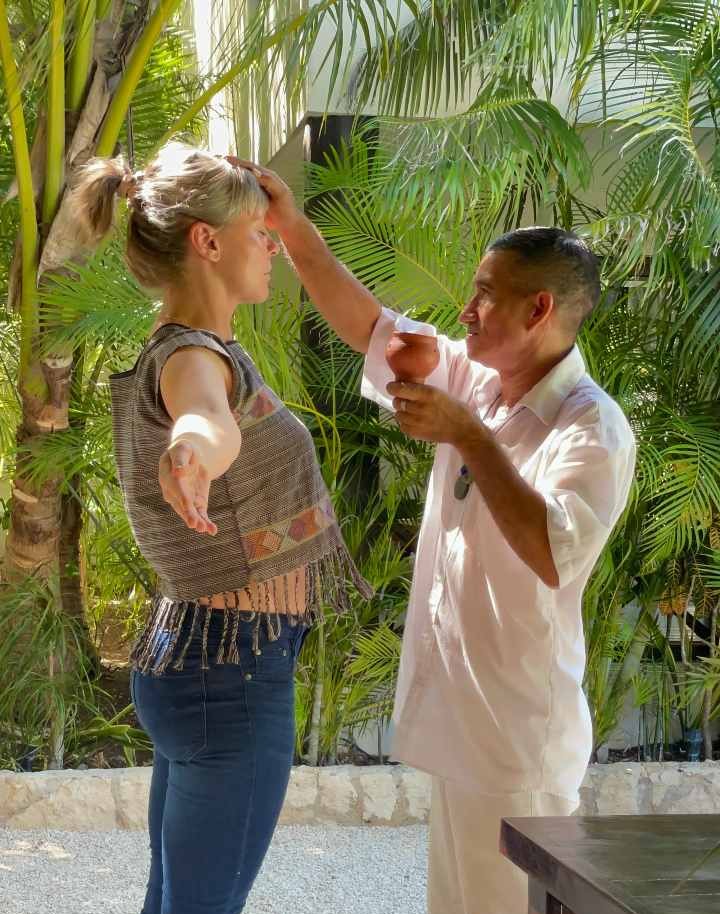
From that point, a board-certified emergency physician remains at your side. We open your experience with a sacred ritual, creating both a clinical sense of safety, and a shamanic container. Cardiac telemetry runs continuously. The acute experience typically lasts 12–24 hours.
The oneirogenic phase — the period of intense introspective experience — usually peaks in the first 4–16 hours. What emerges during this time varies profoundly between individuals: visual phenomena, memory processing, emotional release, and insight that many clients describe as unlike anything they have experienced before. Emergence is gradual, often arriving with a quality of quiet clarity.
Throughout every hour of this process, you are medically monitored and never alone.
5. Immediate Aftercare — 24 to 72 Hours Post-Treatment
As the acute experience resolves, physician monitoring continues. The nervous system is in a state of recalibration — profound but also fragile. Rest is prioritised. Nutritional support begins. Gentle movement is introduced.
Your integration specialist checks in. Initial impressions and insights from the experience are gently explored — not pushed, but held with care. The process of making meaning has begun, and the clinical team is with you as it does.
6. Integration — The 30-Day Programme
Ibogaine’s neuroplasticity window does not stay open indefinitely. Research suggests it is most active in the weeks immediately following treatment — a period during which new patterns are easier to establish and old ones are easier to release. Bassé’s 30-day structured integration course is designed to use that window deliberately.
Week 1 — Nervous System Stabilisation: The focus is rest, somatic awareness, and beginning to understand what the experience revealed. Kat Courtney, Bassé’s Head of Integration, guides clients through the initial processing phase with trauma-informed 1:1 sessions. The goal is not to rush toward conclusions but to let the nervous system land.
Weeks 2–4 — Building New Patterns: With Faegann Harlow, Somatic Experiencing facilitator, clients work through body-based integration practices that help discharge stored tension and build new felt-sense responses to familiar triggers. Structured coaching sessions with Kat focus on translating insight into daily behaviour — sleep, movement, relationship, routine.
Completion of the integration programme is not a formality. It is where the majority of lasting change is consolidated. For clients who want continued support beyond the 30 days, ongoing 1:1 coaching is available.
→ For a full breakdown of what integration involves, see our Ibogaine Integration Process guide. For what to expect during and after treatment, see our What to Expect page.
What to Expect During Ibogaine Treatment
Ibogaine’s introspective experience is not a recreational trip. It is a medically supported neurological and psychological process — one that unfolds with its own rhythm and does not respond well to resistance. Knowing what to expect does not diminish it. It allows you to meet it with some orientation.
Hours 0–4: Onset
Within 45–60 minutes of administration, the onset begins. Physical sensations are often the first signal — a heaviness in the limbs, mild nausea in some clients (managed by our medical team), sensitivity to sound and light, and a distinct shift in visual perception. The oneirogenic state begins to emerge: closed-eye imagery, a quality of hypnagogic dreamfulness, and a sense of moving inward.
Most clients find that resistance during this phase intensifies discomfort. The clinical preparation during the preceding days is partly about building the capacity to receive rather than fight what arises.
Hours 4–16: Deep Reflection
This is the core of the ibogaine experience. The introspective journey during this phase can involve the surfacing of memories — often early ones, often with a vividness and emotional texture that feels more like reliving than recalling. Patterns become visible. Connections between past experience and present behaviour emerge with unusual clarity.
This is not uniformly comfortable. It is, for many clients, the most honest encounter with their own story they have ever had. Our team is present throughout. You are not in this alone.
Hours 16–36: Emergence
The intensity gradually resolves. What replaces it is often described as a profound quietness — a sense of having moved through something significant and arrived somewhere cleaner. Fatigue is common and appropriate. Some clients feel immediate emotional openness. Others feel a more neutral, observational calm.
Whatever the texture of emergence, the integration work that follows is what determines whether these insights translate into lasting change.
Our team is with you throughout every phase — medically, and as human beings who understand what this experience asks of you.
Conditions Treated with Ibogaine at Bassé
Ibogaine is not a single-condition intervention. Its neurological reach — across opioid receptors, serotonin systems, and neuroplasticity pathways simultaneously — means it addresses a range of conditions that often share the same underlying roots: unprocessed trauma, dysregulated nervous systems, and entrenched neurochemical patterns.
Opioid addiction is where ibogaine’s clinical evidence base is strongest. Whether the dependency involves fentanyl, heroin, oxycodone, or other prescription painkillers, ibogaine can interrupt acute withdrawal rapidly and reset the receptor landscape that maintains craving. → See our ibogaine for opioid addiction guide.
Alcohol dependence requires particular medical care due to the risks of alcohol withdrawal, which Bassé manages with dedicated stabilisation protocols prior to ibogaine administration. → See our ibogaine for alcohol dependence guide.
Cocaine and stimulant dependence, while physiologically different from opioid addiction, responds to ibogaine’s neuroplasticity reset — particularly for clients whose stimulant use is entangled with underlying mood dysregulation or trauma.
PTSD and trauma — A landmark 2023 Stanford study found that ibogaine reduced PTSD symptoms by up to 88% in veterans with traumatic brain injuries, with results sustained at 12-month follow-up. At Bassé, trauma-informed integration is built into every stage of care. → See our ibogaine for veterans page.
Treatment-resistant depression is increasingly represented in Bassé’s client population — individuals who have exhausted conventional pharmacological and therapeutic options. Ibogaine’s multi-system neurological action can create openings that SSRIs and talk therapy alone have not reached.
Kratom dependence, often underestimated in severity, involves genuine opioid receptor dependence that ibogaine addresses at the neurochemical level. → See our ibogaine for kratom dependence guide.
Chronic pain with substance involvement — where pain management has evolved into dependence, ibogaine offers a potential reset of both the receptor patterns and the psychological relationship with pain.
Ibogaine Treatment Cost: Investment and Value
The honest reality of ibogaine treatment cost is that it spans a wide range across the industry — roughly $5,000 at the lower end to $25,000 or more for fully medicalised programmes.
What drives that variation is not arbitrary. It reflects the degree of medical infrastructure, physician qualification, monitoring capability, and aftercare depth that surrounds the treatment.
At the bottom of that range, something important is usually absent: overnight nursing coverage, continuous cardiac monitoring, or licensed emergency physicians. With ibogaine, those absences are not inconveniences — they are safety gaps.
Bassé sits at the fully medicalised end of that spectrum. What that investment includes: board-certified emergency physicians in 12-hour shifts, onsite cardiac monitoring, pharmaceutical-grade ibogaine HCL, a boutique 6-room facility with genuinely personalised care, and a 30-day structured integration programme that most clinics do not offer at all. This is not a volume facility — and that is a clinical decision, not a marketing one.
Ibogaine is not currently covered by insurance. That is a practical reality worth planning for, and our team is available to discuss programme structures and timing in a way that reflects your situation.
What is also worth considering is the cost of not treating effectively. Most people who reach Bassé have already spent significantly on previous treatment attempts — rehab programmes, therapy, detox, lost employment, health consequences.
Ibogaine, when it works and is properly supported, does not need to be repeated monthly. For many, it represents the first investment that actually addresses the root rather than the symptom.
To discuss cost, what is included, and which programme structure fits your situation, speak with our team — no commitment required.
→ For a detailed breakdown of what determines ibogaine treatment cost, see our ibogaine treatment cost guide.
Why Choose Bassé: The Differentiators That Matter
There are a growing number of ibogaine clinics. Most offer variations of the same proposition. A small number offer something genuinely different. Here is what makes Bassé one of them.
Dr. Deborah Mash, Scientific Advisor. The only person in the world granted FDA approval to conduct human ibogaine trials. Her research at the University of Miami has defined the global understanding of ibogaine’s safety and therapeutic mechanisms. Her active advisory role at Bassé is not a biographical detail — it is the scientific foundation our protocols are built on.
Dr. Juan Manuel Quijada Gaytán, Medical Director. Former Head of Mexico’s National Mental Health and Addictions Commission. The clinical authority at Bassé extends from the world’s leading ibogaine researcher to the physician who once oversaw addiction medicine at a national level. That combination exists nowhere else.
Laura Shapiro, Founder. After 14 years of opioid addiction, Laura found ibogaine in 2006. She built Bassé around the standard of care she needed and couldn’t find. She has now worked directly in ibogaine care for over a decade. Her understanding of what clients experience — from the inside — shapes every aspect of how Bassé operates.
Kat Courtney and Amanda Wideman, Integration Team. Kat is a pioneer in the integration space, and has developed proprietary protocol to maximize the neuroplasticity present in the weeks following Ibogaine. Kat leads integration through a Somatic Experiencing framework. Amanda facilitates the body-based practices that help clients process and embody what ibogaine reveals. This is not aftercare as a checkbox. It is where the treatment actually completes.
A boutique facility that means it. Six rooms. Jungle setting between Playa del Carmen and Tulum. Farm-to-table meals. Private balconies. The small cohort size is a clinical choice — it determines the depth of individual attention possible. Bassé is not optimised for throughput.
Cultural reciprocity, not appropriation. Bassé works in partnership with Audrey Jover, a Fang Bwiti Priestess from Gabon. We plant one iboga tree per client and donate to Bwiti Roots. The tradition that gave the world ibogaine deserves active reciprocity — not extraction.
No 5-MeO-DMT combination. Some clinics combine medicines. Bassé does not. Our medical team and scientific advisors are unambiguous: combining ibogaine with other psychoactive substances overloads the nervous system and complicates integration. This is a safety decision. It is also a statement about what we believe ibogaine, properly supported, is capable of on its own.
Ready to explore whether Bassé is right for you? Book a free discovery call — our team responds within 24 hours.
Questions to Ask Any Ibogaine Clinic Before You Book
The quality of your experience — and your safety — depends heavily on the clinical environment you choose. These questions are not designed to intimidate. They are designed to protect you.
Is there a board-certified physician onsite 24 hours a day, throughout the entire treatment? Not on call. Onsite. The distinction matters.
What emergency credentials do your physicians hold? Look for ACLS certification and emergency medicine or critical care backgrounds specifically.
What safety screening do you conduct before treatment? A legitimate clinic conducts a 12-lead EKG, comprehensive blood work, and a full medication review as a minimum. If a clinic does not screen for QTc prolongation, walk away.
What grade and purity of ibogaine do you use? Is it third-party tested? Pharmaceutical-grade ibogaine HCL, independently verified, is the standard. Anything less is a variable you should not accept.
Do you combine ibogaine with other psychoactive substances? If the answer is yes, understand why — and understand the additional risk profile that creates.
What is your emergency response protocol? How close is the nearest hospital? You want a specific answer: equipment onsite, named emergency protocol, hospital within a defined distance.
What integration support is included, and for how long after treatment? A 30-day structured programme is meaningful. “We recommend a therapist” is not.
Can I speak with your medical director before committing? A clinic confident in its clinical standards will say yes.
What is your policy if I am medically ineligible upon arrival? The answer tells you whether their screening is real or performative.
Frequently Asked Questions
Is ibogaine treatment legal in Mexico?
Yes. Ibogaine is not a scheduled or controlled substance in Mexico, which means it can be legally administered in clinical settings. This is why Mexico has become the primary destination for internationally-standard ibogaine treatment for people from the United States, Canada, and Europe, where ibogaine remains a controlled substance. Bassé operates in full compliance with Mexican health law, with licensed physicians administering treatment.
How long does ibogaine treatment take at Bassé?
The core treatment stay at Bassé is typically 7–10 days, encompassing arrival and settling in, pre-treatment preparation, the treatment day itself, and the initial recovery period. The 30-day integration programme that follows runs remotely after you return home, through structured sessions with Kat Courtney and Amanda Wideman. The full treatment arc — from first contact to completion of integration — is approximately five to six weeks.
What does ibogaine treatment cost?
Fully medicalised ibogaine treatment programmes range from approximately $11,000 to $18,000 or more, depending on the level of care, detox requirements, and length of stay. At Bassé, your investment includes board-certified emergency physicians, onsite cardiac monitoring, pharmaceutical-grade ibogaine HCL, a boutique residential setting, and the 30-day integration programme. To discuss specific programme costs and what is included for your situation, speak with our team. → See our ibogaine treatment cost guide for a full breakdown.
Do I need to detox before ibogaine treatment?
It depends on your substance history. For many clients, ibogaine itself addresses acute withdrawal — this is one of its most clinically significant properties.
For clients with complex fentanyl dependence or long-term high-dose opioid use, a period of stabilisation before ibogaine administration may be required to reduce cardiac and physiological risk.
Bassé conducts this stabilisation onsite, under physician supervision, as part of the programme. This is assessed during pre-treatment screening.
How dangerous is ibogaine? What are the real risks?
Ibogaine’s primary risk is cardiac — specifically, it can prolong the QTc interval and, in people with underlying cardiac vulnerabilities or on contraindicated medications, trigger dangerous arrhythmias.
This risk is real and should not be minimised. It is also the reason Bassé’s clinical infrastructure is built around continuous cardiac monitoring, emergency-certified physicians, and comprehensive pre-treatment cardiac screening.
The majority of documented ibogaine-related adverse events have occurred in unmonitored settings. In properly medicalised environments with appropriate patient selection, the risk profile is substantially different.
How does ibogaine’s neuroplasticity window work, and how long does it last?
Ibogaine promotes the production of GDNF (glial cell line-derived neurotrophic factor) and BDNF (brain-derived neurotrophic factor) — proteins that support the formation of new neural connections and the repair of pathways damaged by long-term substance use.
This creates an elevated state of neuroplasticity in the weeks following treatment — a window during which the brain is more receptive to forming new patterns and releasing old ones. Research suggests this window is most active in the first 30 days. Bassé’s integration programme is timed deliberately around this window.
Is ibogaine effective for fentanyl addiction?
Yes — though fentanyl dependence requires particular clinical care due to the drug’s potency and extended half-life. Ibogaine can rapidly interrupt fentanyl withdrawal and reset the opioid receptor dysregulation that drives craving. At Bassé, clients with fentanyl dependence undergo enhanced screening and, where necessary, a stabilisation phase before ibogaine administration. Our clinical team has extensive experience managing complex opioid cases, including high-tolerance fentanyl dependence.
How is Bassé different from other ibogaine clinics?
Several things are genuinely distinctive and cannot be replicated by other clinics. Our Scientific Advisor, Dr. Deborah Mash, is the only person ever granted FDA approval for human ibogaine research — an active advisory relationship, not a biographical footnote.
Our Medical Director, Dr. Juan Manuel Quijada Gaytán, is the former Head of Mexico’s National Mental Health and Addictions Commission. Our founder Laura Shapiro brings 14 years of lived opioid recovery experience and over a decade working directly in ibogaine care.
And our 30-day integration programme — led by Kat Courtney and Amanda Wideman — provides a level of structured post-treatment support that most clinics do not offer at all.
What happens after ibogaine treatment?
The days immediately following treatment are characterised by fatigue, emotional openness, and a quality of perceptual clarity that many clients find unusual and valuable. Bassé’s 30-day integration programme begins before you leave — with initial sessions with your integration specialist — and continues remotely after you return home.
This includes structured weekly sessions, somatic practices, and ongoing 1:1 coaching to help consolidate the insights from treatment into daily life. The weeks after ibogaine are not a wind-down. They are where the work of lasting change happens.
Can veterans access ibogaine treatment at Bassé?
Yes, and this is an area of particular clinical focus at Bassé. A 2023 Stanford University study found that ibogaine reduced PTSD symptoms by up to 88% in veterans with traumatic brain injuries, with results sustained at 12-month follow-up.
Veterans with combat trauma, treatment-resistant PTSD, and TBI represent a meaningful portion of Bassé’s client population. Our trauma-informed care approach is well-suited to the specific presentation of military-related trauma, and our team has experience working with veterans navigating both the clinical and psychological dimensions of this work.
See if Bassé Is Right for You
Researching ibogaine treatment is not the same as being ready for it — and being ready for it is not the same as being eligible. The next step is a conversation: confidential, no commitment implied, and focused entirely on understanding whether this is the right path for you at this point in your life.
Our team responds within 24 hours.
Contact Bassé — Start the Conversation Call us directly: +1 415-319-6319
Medical disclaimer: The information provided in this guide is for educational purposes only and does not constitute medical advice. Ibogaine is an investigational substance not approved by the US Food and Drug Administration for the treatment of any condition. Individual outcomes vary and cannot be guaranteed. Bassé does not make claims of cure or assured recovery. Anyone considering ibogaine treatment should consult with a qualified medical professional regarding their personal health history and suitability for treatment.